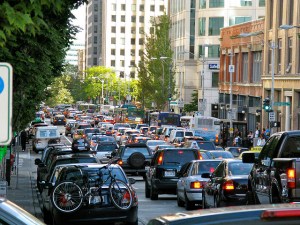
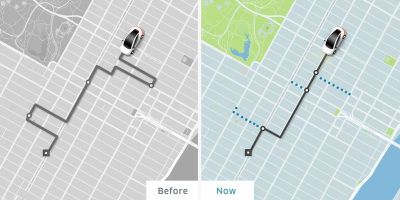
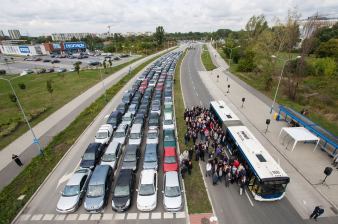
Uber is rolling out a new feature that will encourage people who use its shared-ride service in New York to walk to the nearest intersection, instead of getting picked up at their door. The company hopes that by avoiding looping through congested Manhattan to pick up and drop off multiple people, it will make trips faster and easier -- but Uber is trying to solve a problem that buses solved generations ago.
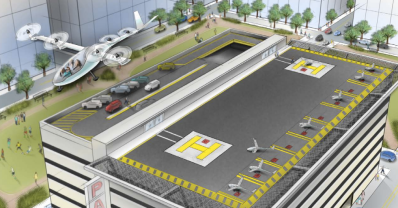
Whizzing above the city may sound appealing in a Jetsons sort of way, but Uber's thinking on this technology is completely untethered from its impact on the cities and towns below, where the people are.
It's been a bad few weeks for Uber, with CEO Travis Kalanick recently caught on tape in a shouting match with a driver over the company's diminishing pay. Joe Cortright at City Observatory says that beyond the public meltdown, there are a growing number of signs that Uber's business model just isn't sustainable.
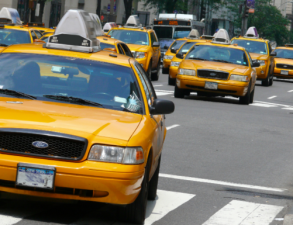
MIT researchers got a ton of press for a mathematical model that showed sharing for-hire vehicles could replace 85 percent of New York City's taxi fleet. But their conclusions were built on shaky assumptions, says economist Joe Cortright.
The latest line from anti-transit types is that ride-hailing apps like Uber and Lyft are going to make fixed-route bus or rail service obsolete. If you find yourself arguing with someone about why transit is essential, a new fact sheet from TransitCenter can help.